



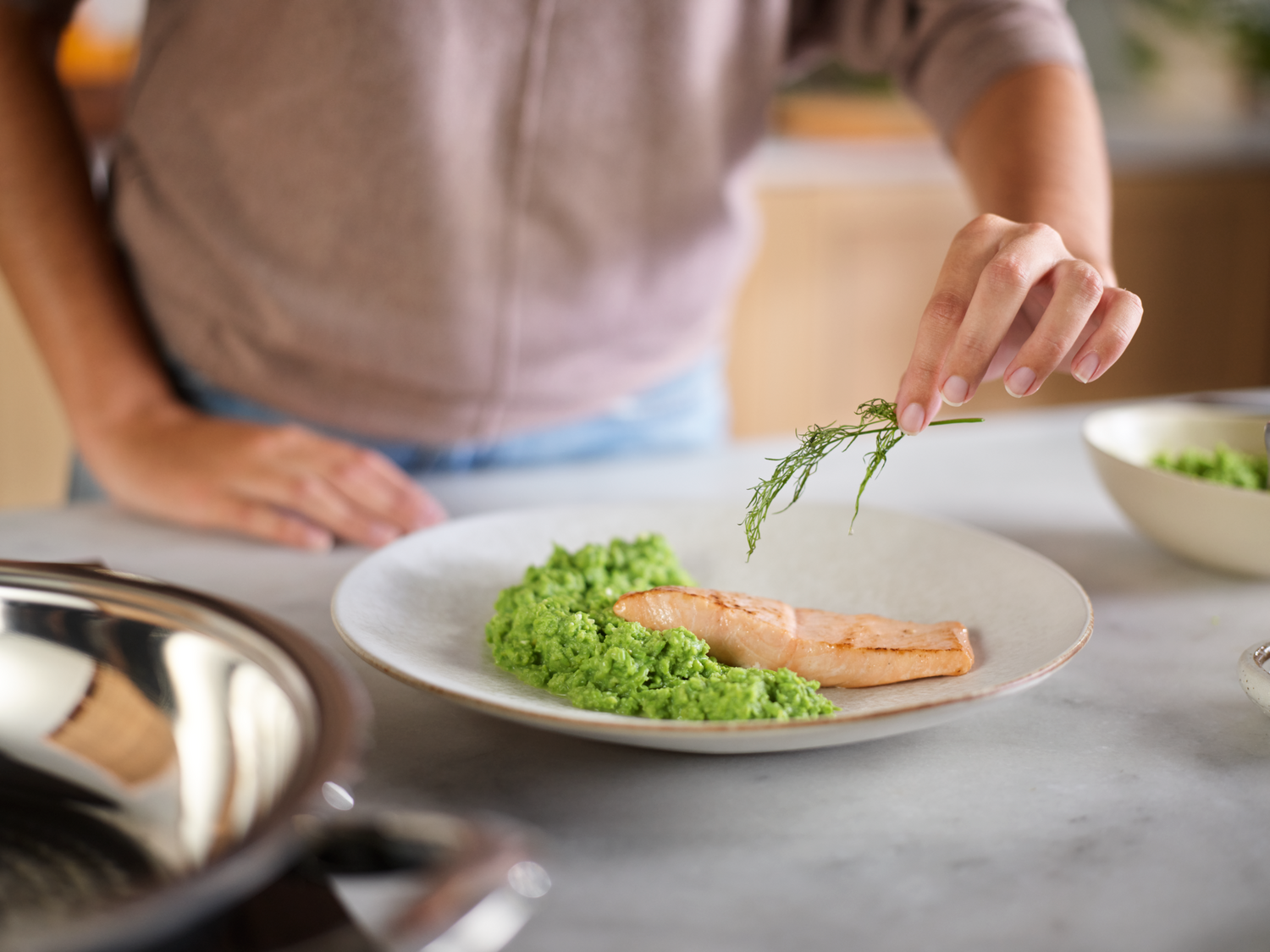
It looked plain. A fillet of salmon, a smear of something green, no garnish, no architecture on the plate. I'd just sat down at a friend's house expecting the kind of meal you politely compliment and quietly forget.
Then I tasted it.
I've eaten in restaurants with three Michelin stars and remember less. What I learned later, asking too many questions in the kitchen, is that nothing on that plate was complicated. The chef wasn't doing more than I do at home. She was doing less — and trusting her pan to do the rest.
That dinner is why I take cookware seriously now. Not because it's fancy. Because of what it lets you stop worrying about.
Great hosts aren't better cooks. They're better managers.
There's a comforting myth that the people who throw the dinners everyone remembers are simply more talented in the kitchen. It lets the rest of us off the hook.
It's also wrong.
What separates a smooth evening from a chaotic one isn't skill. It's control over the few things you can actually control — heat, timing, the order in which food leaves the stove, and whether you're still in the room when the doorbell rings.
Standard cookware works against all of that. It forces you into reaction mode: adjusting the burner because one side is browning faster, checking the pan every ninety seconds, rushing plates because the sauce is about to split. You're a firefighter for two hours.
Premium cookware flips the dynamic. You stop reacting and start choreographing. That single shift is what guests actually feel — even though they'll never know why.
What "premium" actually means when you pick it up
You don't need a marketing brochure to recognize good cookware. You feel it in three places.
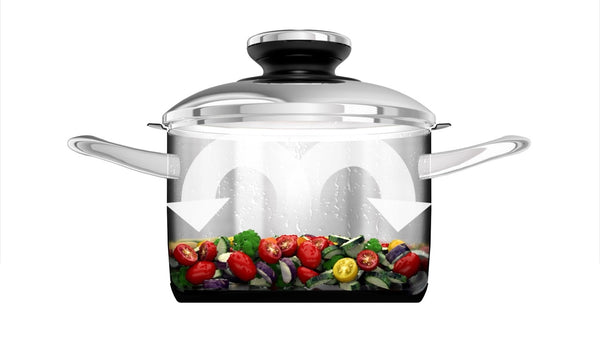
Heat builds evenly, not aggressively. Thick, multi-layer bases — usually stainless steel bonded around an aluminum or copper core — spread heat across the entire cooking surface instead of concentrating it over the burner. No hot spots. No scorched centers with raw edges. When you turn the dial down, the pan actually responds within a reasonable window instead of holding onto heat like a stone.
Food behaves predictably. Because the surface temperature is uniform, a chicken thigh cooks the same on the left side of the pan as the right. Vegetables hold their color. Sauces emulsify and stay emulsified. You stop guessing.
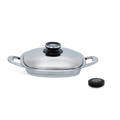
The pan feels balanced in your hand. A properly weighted handle, a flat base that doesn't warp after a year, a lid that actually seals. These sound like small things. After a hundred dinners, they're the difference between cookware you reach for and cookware you avoid.
If you're the kind of cook who insists it's the chef, not the tools — good. You'll notice these things faster than anyone.
The hosting question almost everyone gets wrong
"How do I serve everything at the same time without losing my mind?"
The answer isn't better multitasking. It's better margins.
Premium pans hold heat without continuing to cook the food inside them. That sounds like a small detail. It's actually the whole game. It means a finished dish can sit for ten minutes while you plate the others — and arrive at the table the same temperature it left the stove, with the same texture.
Guests arrive late. Conversations run long. The starter takes twenty minutes longer than anyone planned. With cookware that tolerates a pause, none of that matters. You stop racing the clock and start owning it.
Restaurant-quality plating without the plating
"How do I make my food look like it came from a restaurant?"
You don't need tweezers or microgreens. You need consistency.
What makes restaurant food look the way it does isn't garnish — it's that the protein is the color it should be, the vegetables haven't gone gray, and the sauce is still glossy when it hits the plate. All three of those depend on temperature control, not skill.
A bonus most people don't think about: a lot of premium pieces are built to go straight from stovetop to table. A cast-iron skillet, an enameled Dutch oven, a copper sauté pan. No transfer to a serving dish, no awkward scraping, no lost heat. The pan becomes part of the presentation, and the food looks intentional because it was handled intentionally.
The part nobody tells you about hosting
"How do I actually enjoy my own dinner party?"
This is the real question. Most hosts spend the evening in the kitchen and call it hosting. It isn't. It's catering, in your own home, for free.
Better cookware buys you back the evening in four concrete ways:
- More prep can be done ahead, because heavy pans hold serving temperature without overcooking the food inside.
More prep can be done ahead, because heavy pans hold serving temperature without overcooking the food inside.
- Cooking windows become predictable, so you can step away from the stove with confidence instead of hovering.
Cooking windows become predictable, so you can step away from the stove with confidence instead of hovering.
- Cleanup is faster — better surfaces release food instead of welding it on, and most premium pieces are built to survive decades of use without losing that property.
Cleanup is faster — better surfaces release food instead of welding it on, and most premium pieces are built to survive decades of use without losing that property.
- You need fewer pans on the stove at once, because each one does its job reliably the first time.
You need fewer pans on the stove at once, because each one does its job reliably the first time.
The result isn't that you cook less. It's that you cook without being chained to the burner. You circulate. You sit down. You host with your guests instead of for them.
High-end kitchens are simpler, not more complicated
There's a stubborn belief that a serious home kitchen means more gadgets, more single-purpose tools, more techniques to manage. Walk into the kitchen of anyone who actually cooks for people regularly and you'll see the opposite: a handful of pieces, used constantly, that handle almost everything.
When your cookware is reliable, your menus get simpler. You stop building in backup dishes to compensate for the main course going wrong. You repeat the meals that worked, because you trust they'll work again. You serve fewer things, better.
The price tag, honestly
"Is it actually worth it?"
Sticker shock is real. A single sauté pan from a serious brand can cost more than an entire starter set from a supermarket. The question is whether what you get back justifies it.
Two honest answers:
The first is durability. A good pan, treated reasonably, will outlast your kitchen. Spread the cost over twenty or thirty years of use and the math stops looking like a luxury purchase and starts looking like an appliance.
The second — and this is the one that matters more — is mental load. Fewer decisions during cooking. Fewer near-misses. Fewer moments of "I think it's done, let me cut into it and check." When guests are in the next room, that bandwidth is worth more than the pan cost.
What your guests notice without knowing they're noticing it
Almost no one comments on cookware. They comment on how the evening felt.
They notice that you were sitting down when they arrived. That the courses came out evenly spaced. That nothing was lukewarm. That the salmon was the color salmon is supposed to be. That you weren't apologizing for anything.
There's a quieter benefit worth mentioning. Better pans support gentler cooking — less added fat, less reduction needed to recover a sauce that broke, less reliance on heavy finishing to mask uneven results. Food ends up lighter without anyone announcing that it's lighter. Guests leave feeling good instead of heavy. That's a health win nobody had to talk about.
Premium cookware works invisibly. It removes obstacles instead of drawing attention to itself. If hosting is part of how you connect with people, the tools you use to do it aren't a technical detail. They're foundational.
The shift isn't that better cookware makes you a more impressive host.
It makes you a more present one.
That's what people remember.
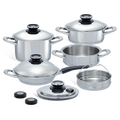
👉 Ready to start? Our Essential Collection is the core set most home hosts actually need — and costs less bought together than piece by piece.
Sets for hosts
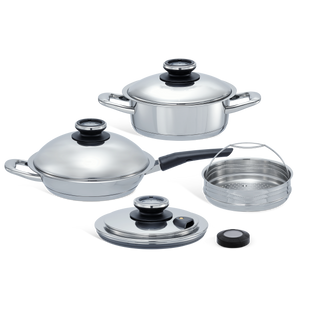
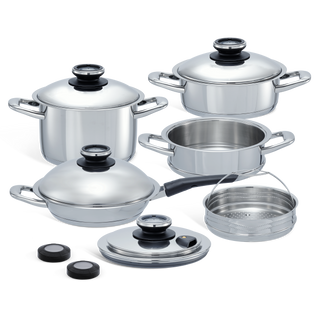
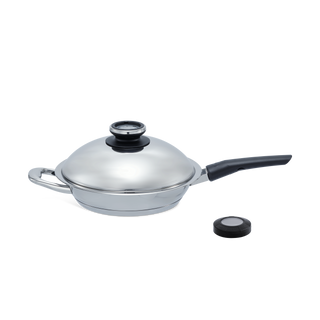

Sear without added fat, plus roasting & frying — with precise temperature control.

Leave a comment
This site is protected by hCaptcha and the hCaptcha Privacy Policy and Terms of Service apply.