



There was a stretch where every weeknight ended the same way: I'd stand in front of the open fridge at 7 p.m., too drained to decide anything, and order the same Thai takeout I'd ordered the night before.
It wasn't that I didn't care about eating well. It's that every piece of cooking advice I'd ever absorbed assumed I had energy I didn't have. Chop this, marinate that, mind three pans at once — fine for a Sunday, impossible after a ten-hour day.
Then I stopped trying to cook better and started trying to cook with less. These seven things are what actually changed it. Now, even on the days I come home empty, dinner is on the table in fifteen minutes — and it's usually better than the takeout was.
Secret #1: You don't lack motivation. You lack capacity.
This is the one that reframes everything else, so it comes first.
After work, the problem isn't willpower. It's that three specific tanks are empty:
Decision fatigue. You spent all day making calls — you finalized the Q4 budget before lunch — and decision-making is a finite resource. By 5:30, "what's for dinner" is genuinely harder to answer than the things you handled at 9 a.m. with ease.
Low patience. You're hungry, your blood sugar's dropping, you're short-fused. This is the worst possible mindset for a recipe with steps you've never tried.
No energy. You don't have dicing-and-julienning in you. You don't have three-pans-at-different-temperatures in you. You've already spent the day's supply.
So "just try harder" is useless advice. There's no hard left to try. The fix isn't more effort — it's less friction. Everything below is a way to remove friction, not add discipline.
Here's the test that follows from it: if cooking takes longer than ordering delivery, it won't happen regularly. So the goal is to make fresh food the path of least resistance.
Secret #2: Set rules before you're tired
Reducing friction starts with decisions you make now, while you still have capacity — not at 7 p.m. when you don't.
Mine are three hard limits for any weeknight meal:
- Prep: 5 minutes max.
- Cooking: 10 minutes max.
- Cleanup: 1–2 pans, no more.
Anything past that doesn't happen on a Tuesday, and pretending otherwise just sets up another takeout night.
This is the difference between recipes and systems. A recipe is a one-time creative act. A system is a constraint that makes the right choice automatic. Movies show people improvising three-course meals after a brutal day, smiling through a montage. Real life runs on constraints — and the constraints are what make success repeatable.
The rest of these secrets are the systems that fit inside those limits.
Secret #3: Steaming is the most underrated weeknight method
Steaming has an image problem. No sizzle, no char, no drama — so people assume it means boring food. That reputation is costing them the single most efficient cooking method there is.
Here's why it's built for tired weeknights:
- No oil, no temperature guesswork. If steam is forming, you're at 100°C. You can't overshoot it. There's nothing to monitor.
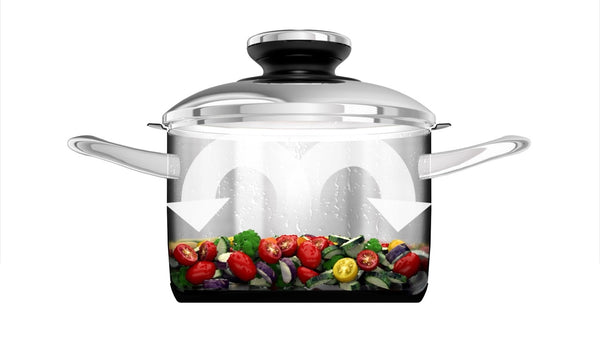
- It's genuinely fast. Heat and moisture hit every surface of the food at once, so cooking times are short.
- Nutrients stay in the food. Instead of leaching into boiling water or breaking down under high pan heat.
- It's a one-burner full meal. This is the part most people miss: you can stack steam vertically. Fish on one level, vegetables on another, grains below — all from a single steam source, on one burner. No managing four pans spread across the cooktop.

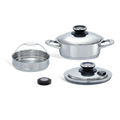
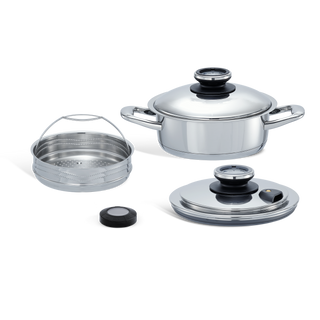
Stackable steaming set — cook more, healthier & faster, across multiple levels.
Worried it'll taste flat? Build a quick sauce on a second burner while the steam does the work, and add it at the end. You get the speed and nutrition of steaming with none of the blandness.
Secret #4: Make one-pan cooking faster with four guardrails
Prefer the sear and sizzle? A one-pan dinner can hit the 15-minute target too — you just need a few rules so it doesn't sprawl:
- Cook hot. But controlled. High heat gets food to temperature fast and keeps color and texture intact.
- Pick lean proteins. Less fat and water means faster doneness — chicken, shrimp, tofu, eggs.
- Use fast vegetables. Thin or quick-cooking ones (zucchini, peppers, spinach). Dense ones like Brussels sprouts fight the clock unless sliced thin.
- Sauce last. Add it after cooking, never during — a sauce in the pan just reduces, darkens, and slows everything down. It's a finish, not an ingredient.
That shortlist alone — chicken, shrimp, eggs, tofu, zucchini, peppers, spinach — gives you dozens of combinations without a single unknown. The two mistakes that wreck it: overcrowding the pan and saucing too early. Avoid both and you've got dinner in under ten minutes.
Secret #5: Cook everything at once (mise en place)
The real time sink isn't cooking — it's doing things in sequence. Vegetables, then protein, then the grain, then plating. By the time the last one's done, the first one's cold.
Professionals don't work that way. They run everything in parallel, and the thing that makes parallel cooking possible is mise en place — French for having everything measured, prepped, and laid out in front of you before the heat goes on. No scrambling for a spice mid-cook. You just add things when the moment calls for them.
A worked example — a chicken and vegetable rice bowl:
- Chicken steams on the bottom tier, vegetables on the top tier — one steamer, one burner.
- Rice cooks in parallel in a pot, pressure cooker, or rice cooker.
- The sauce gets whisked or simmered while both of those run.
Everything finishes around the same time, you've used two or three vessels instead of five, and you can wash as you go. Done well, parallel cooking cuts total time by 50–60%. It takes a little practice, but it's the single highest-leverage skill on this list.
Secret #6: Build a list for the brain-dead nights
Some evenings you're not just tired, you're blank. You can burn more time hunting for an idea than the cooking itself would take.
The fix is to remove the decision entirely. Keep a short list of go-to meals you always have ingredients for, taped inside a cabinet door. On empty nights you don't think — you pick one and go.
These aren't food-blog fantasies. They're real 15-minute weeknight meals:
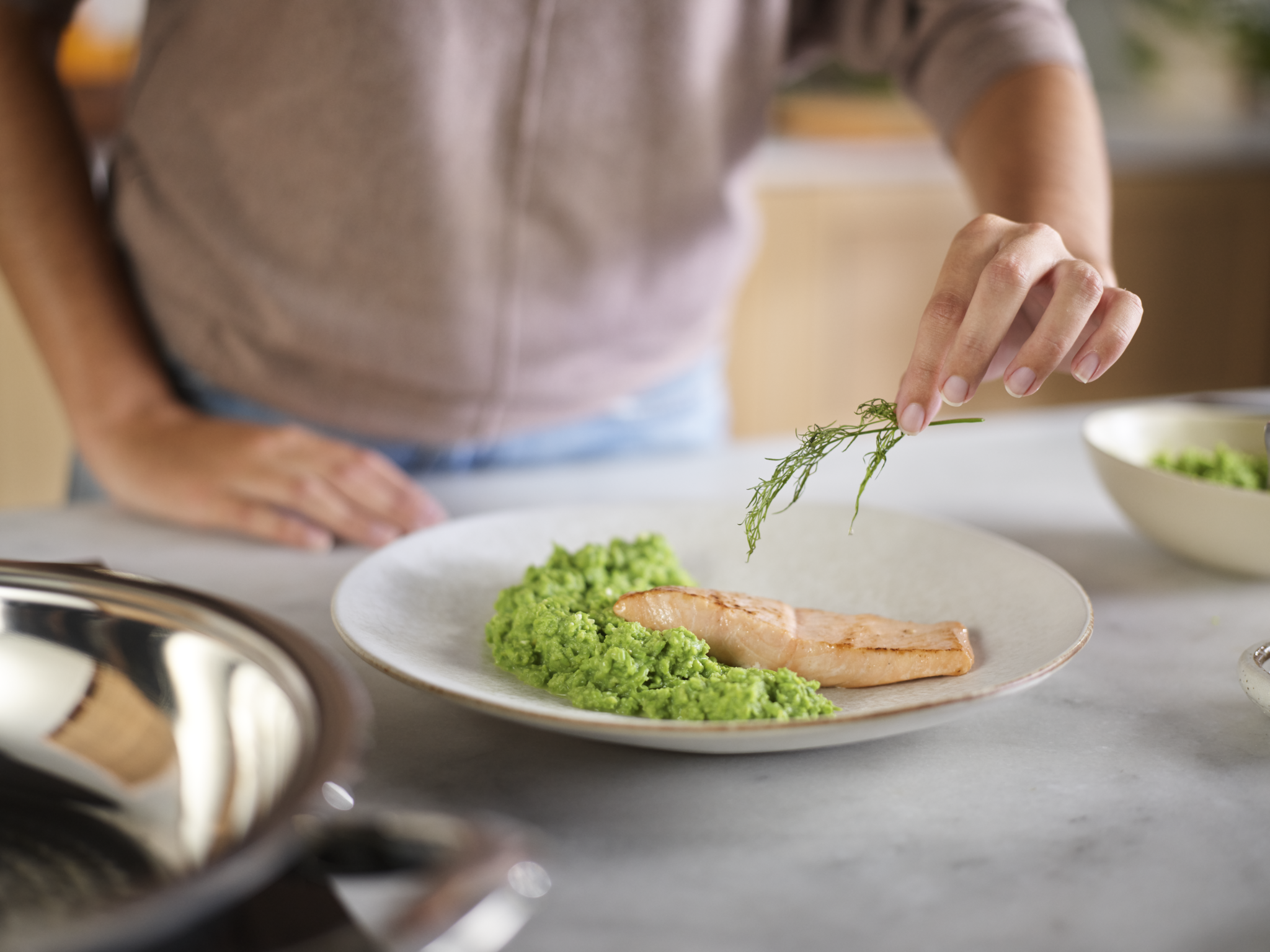
- Steamed salmon, broccoli, potatoes — filling, nutrient-dense, almost no cleanup.
- Chicken and zucchini, one pan — lean protein and veg, high heat, fast.
- Eggs with steamed spinach and carrots — high protein, extremely quick, cheap.
- Shrimp with snap peas and garlic — shrimp cook in minutes.
- Lentils, mixed veg, yogurt dressing — plant-based and fast with pre-cooked lentils.
Every one runs on a fast method, few ingredients, and predictable timing.
Secret #7: Three habits that make it stick — remember "IRL"
The thing that finally made this sustainable wasn't a technique. It was dropping the fantasy of a different gourmet dinner every night and building three habits instead. They work in real life — so, IRL:
I: Ingredient prep
Not full cooked meals reheated into sad clumps. Just wash and cut several days' worth of vegetables and proteins at once, raw, and store them. Then a fresh meal cooks as fast as reheating would. Do it Sunday, when your head is clear.
R: Repeat meals with zero guilt
Variety is overrated on weeknights. Rotate a handful of dinners and you won't get bored, but you will cut decision fatigue and simplify grocery shopping. Save novelty for weekends.
L: Leftovers are money in the bank
But leftovers are great! Think of them as money in the bank. Dinner today becomes lunch tomorrow. This simple habit cuts cooking effort in half and makes healthy eating much more sustainable. Plus, there’s less food waste, so ingredients stretch further.
Why this is about the system, not the recipe
Recipes change every night. The system underneath doesn't. Fast, healthy weeknight food needs four things: predictable timing, minimal steps, little cleanup, and consistent results. Once the method is reliable, the specific recipe barely matters.
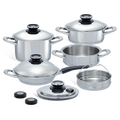
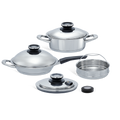
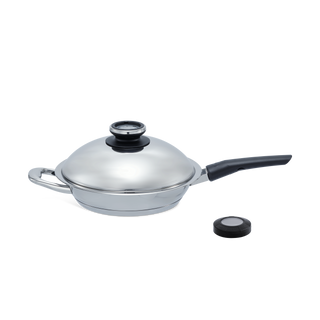
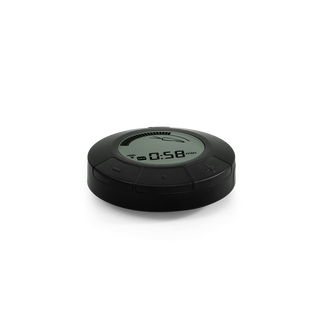
That's the principle our cookware is built around - fast but controlled heat-up times, stack cooking, steaming, and minimal-water and -fat cuisine - so a complete meal comes out of one coordinated set instead of four mismatched pans.
But the core point doesn't depend on any particular gear. Eating well after work isn't about willpower or discipline. It's about friction. Lower it far enough, and the healthy dinner becomes the easy choice — the default, not the exception.
Even on your worst weeknight.
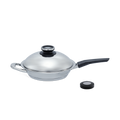
👉 Two systems built for 15-minute weeknights: Pure Steam for stack steaming and Daily Pro for fast one-pan roasting.
Shop the 15-minute kit

Leave a comment
This site is protected by hCaptcha and the hCaptcha Privacy Policy and Terms of Service apply.