



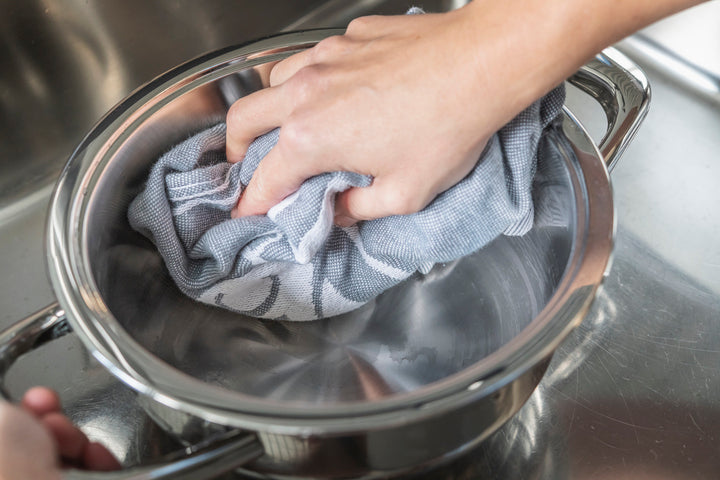
What does spring cleaning mean to you? For many of us home chefs, it means hosting parties. But before we invite people into our home, it means taking a good hard look at our kitchen equipment. Maybe we scrub our cookware until it shines, or re-season a cast-iron pan that’s starting to lose its nonstick coating.
Maybe we scrub cabinets, reorganize drawers to be more efficient based on the specific way we cook. And finally, we might spray some oven cleaner in the oven and then attack the sticky stovetop with our strongest cleaning supplies.
But wait — here’s a thought: what if the biggest thing to clean up in your kitchen isn’t the counter, but your cooking habits?
At AbyAMC, we’ve done a lot of research into this while developing and refining our cookware to be the safest, most durable, and most efficient on the planet. We don’t just engineer our pots and pans to be non-toxic, last a lifetime, be easier to clean, and use less energy to cook in a laboratory — we test them rigorously in the real world.
For us, this isn’t just theory. This is about designing and engineering beautiful, high-end products that celebrate the joy of cooking and hosting like professional chefs in our own kitchens.
So let’s talk about how we cook.
Let’s face it — most American kitchens run hot.
Pan-frying on high or medium-high.
Roasting at 450°F.
Blasting dry heat with air fryers.
It smells amazing. It looks impressive. But it also creates grease buildup, smoke residue, and — yes — nutrient loss.
So while you’re resetting and sprucing up your home in preparation for hosting this spring, it might be time to reset and upgrade your cooking methods.
So that’s the how. Now let’s talk about why.
High-heat cooking creates an unseen mess, too
We see the spatters leaping out of the pan.
We feel the burning prickles of hot oil speckling our hands.
We spray cleaners and scrub the oil spots off the stovetop.
We soak and scrub the pots and pans.
But that’s just the mess we can see. High-heat cooking leaves more behind than surface grime. It affects the quality of our living environment — and the quality of our food.
High-heat cooking makes a mess of our home:
- Tiny aerosolized oil particles spread across our kitchen and settle on tile backsplashes and cabinets, leaving a layer of grease in a radius around the stove that then traps lint and dust to create a dirty film.
- Oxidized fat residue makes its new home on stovetops. We clean most of it off most of the time, but some remains and is reignited when we next use our cooktop.
- Carbonized food in the form of smoke particles drifts into the air, sticking to walls and vents, moving around the house with air currents and making our carpets and clothes smell — and, let’s face it, who hasn’t set off the smoke alarm while in the midst of some gourmet cooking flourish?
- Burned-on buildup inside ovens also reignites when we use our oven, creating extra smoke in addition to the smoke from high-heat roasting — another cause of smoke alarm setoffs!
But high-heat cooking also makes a mess of our food:
- Some of food’s natural nutrition simply vanishes in excessive heat — nutrients such as vitamins, minerals, bioactive plant compounds, and other substances our body needs break down and disappear. Even fats lose flavor and nutritional value by oxidizing.
- Structure, color, and flavor are lost when food is torched with high heat, as the cellular structures of food break down — creating limp, oily mounds of pale food that taste a fraction as good as they should.
- Sugars burn and develop off-flavors instead of slowly developing sweetness.
- Proteins dry out, pushing out moisture by contracting aggressively. Rubbery meat, anyone?
- Carcinogens can be created when food chars in excessive heat — such as polycyclic aromatic hydrocarbons (PAHs) and acrylamide, organic compounds created when food is combusted. Not to mention other volatile organic compounds that make food taste and smell bad when it burns. Yuck!
This means every time you crank up the temperature, you’re creating more mess — not just in your living environment, but in what you’re planning to put into your mouth.
Smart, multitasking steam
 Pure Steam
$795.00
Pure Steam
$795.00
 Audiotherm
$125.00
Audiotherm
$125.00So if spring cleaning is about clearing out what no longer serves you, let’s include cooking habits that work against you and anyone else you cook for.
So — what to do? Fortunately, there are cooking methods that don’t require high heat and create better food, naturally.
Let’s talk about steaming
One of the most searched cooking questions is: “Does steaming preserve nutrients?”
The answer is a resounding YES — and here’s why that matters for your spring reset.
Steaming may not be as exciting as frying, grilling, or roasting, but it can actually produce dishes that taste better.
It works differently from boiling or frying.
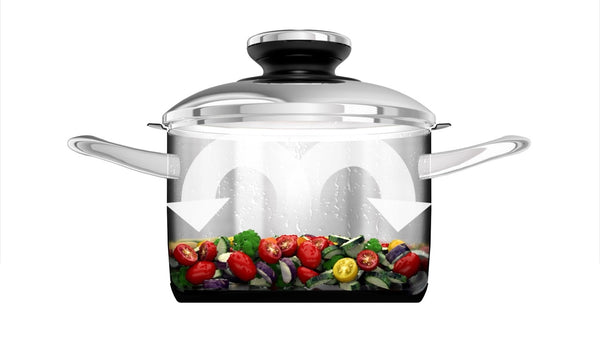
Because steaming works differently from other cooking methods. Instead of submerging food in water — like boiling — or blasting it with high heat — frying — steam cooks at a controlled temperature of 212°F (100°C), the boiling point of water. Importantly, there’s no extreme heat or water contact, which means fewer vitamins leach out.
Steaming beats boiling any day:
- Less nutrient loss, because there’s no water submersion. Nutrition flows out of food and into the boiling water, a process called “leaching” that is just as criminal as it sounds. When you empty the water after boiling, you are literally pouring goodness down the drain.
- Shorter cooking times, because it turns out water as steam has better heat transfer properties than water as water. It’s physics, folks!
- Better color retention, because the phytonutrients that give veggies their bright colors don’t leach into the cooking water. For example, according to a 2023 study, steaming kept more beta carotene in nearly all vegetables compared with other cooking methods tested.
- More stable texture, because veggie cell walls don’t break down due to high heat and release softening enzymes. So their structure stays intact, and they are crisp and firm instead of limp and mushy.
Compared to frying, steaming also wins:
- No added oil required. Yes, oil can add flavor, but it also masks natural food flavors and, if it oxidizes in high heat, it doesn’t taste so good after all.
- No smoke, so no smoke detectors will go off — and that’s a win for everyone, from friends and family to pets!
- No splatter, and if there is, it’s water splatter, which is way easier to clean up than oil.
- No sticky residue. It’s just water.
So when people ask their search engine if steaming preserves nutrients, the answer is yes, according to science.
A side benefit is that it also preserves the cleanliness of your kitchen. Instead of having to binge-clean every spring, you’re creating less to clean in the first place.
And that’s a serious spring upgrade.
The life-changing magic of cooking below 212°F
Most American recipes default to 350°F, 425°F, or even 450°F oven temperatures.
That’s a lot of heat.
Why these temperatures? Well, one reason is science. A 350°F heat is the minimum temperature associated with the Maillard reaction, the process of browning that transforms a piece of bread into toast and shredded cheese into bubbly, crispy goo. But not every food needs to be browned to be tasty. Especially food that has a lot of natural flavor to express, like vegetables.
When you cook below 212°F with steam, you create a completely different environment:
- Fewer high-heat byproducts. In that sense, it’s one of the cleanest ways you can cook.
- Less oil breakdown, as less oil is added — if any — and the heat is low enough to preserve structure and flavor.
- Reduced smoke. There’s steam, but that quickly and harmlessly dissipates.
- More controlled moisture. You’re using water to cook, but not cooking in water. As we’ve discussed, there’s a huge difference.
When you steam, you’re not blasting your food with a proverbial blowtorch.
You’re guiding it to achieve peak color, flavor, and nutrition. This is something your guests will thank you for when it’s time to eat, something your kitchen will thank you for when it’s time to clean, and you’ll be grateful for when you’re cooking.
It feels calmer. Cleaner. More intentional.
That shift alone changes the entire experience of cooking.
A cleaner kitchen starts with cleaner methods
Here’s the part a lot of home chefs miss in the quest to cook like a restaurant chef — with fire, sizzle, and flair.
Spring cleaning isn’t about recovering from chaos, or cleaning up the kitchen after another year of spatters and smoke.
It’s about redesigning your cooking methods so chaos doesn’t happen all over your kitchen.
Traditional cooking methods call for high heat, added oil, constant monitoring, and a lot of cleanup.
Controlled steam cooking flips that.
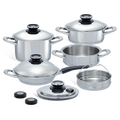
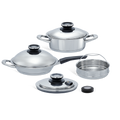
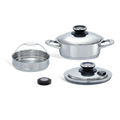
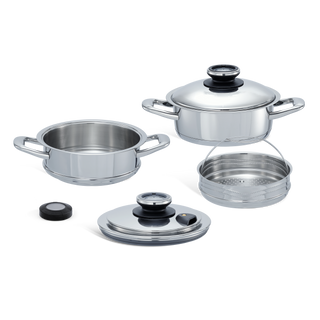
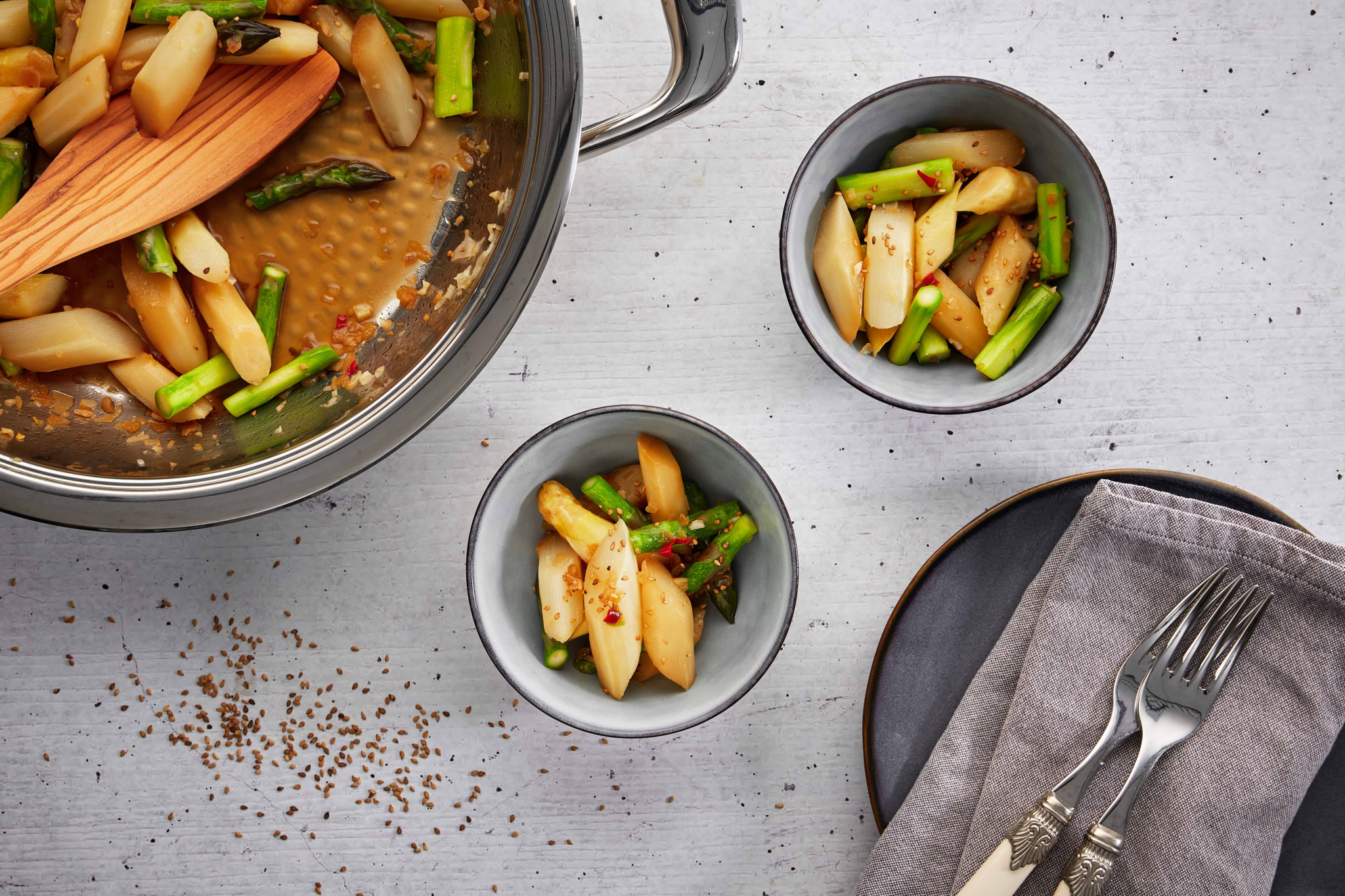
With a closed, temperature-managed setup like AbyAMC’s Pure Steam system, cooking becomes more predictable. Steam stays contained. Temperature stays stable. Oil becomes optional.
And, as we’ve talked about, steaming actually preserves more color, flavor, and nutrition in food. So it’s not like you’re “giving up” taste to “cook healthfully.” Steam is actually bringing you more taste with less cleaning effort — the perfect kitchen upgrade to make for spring.
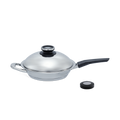
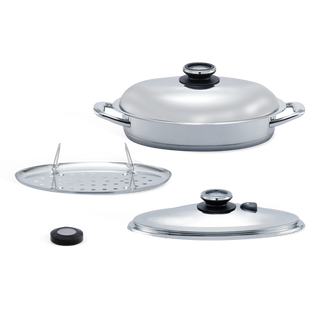
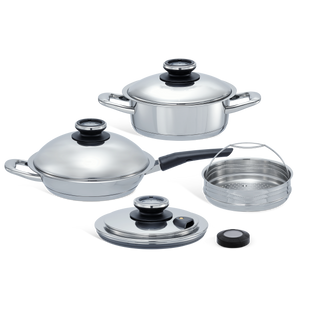
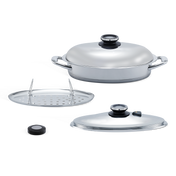
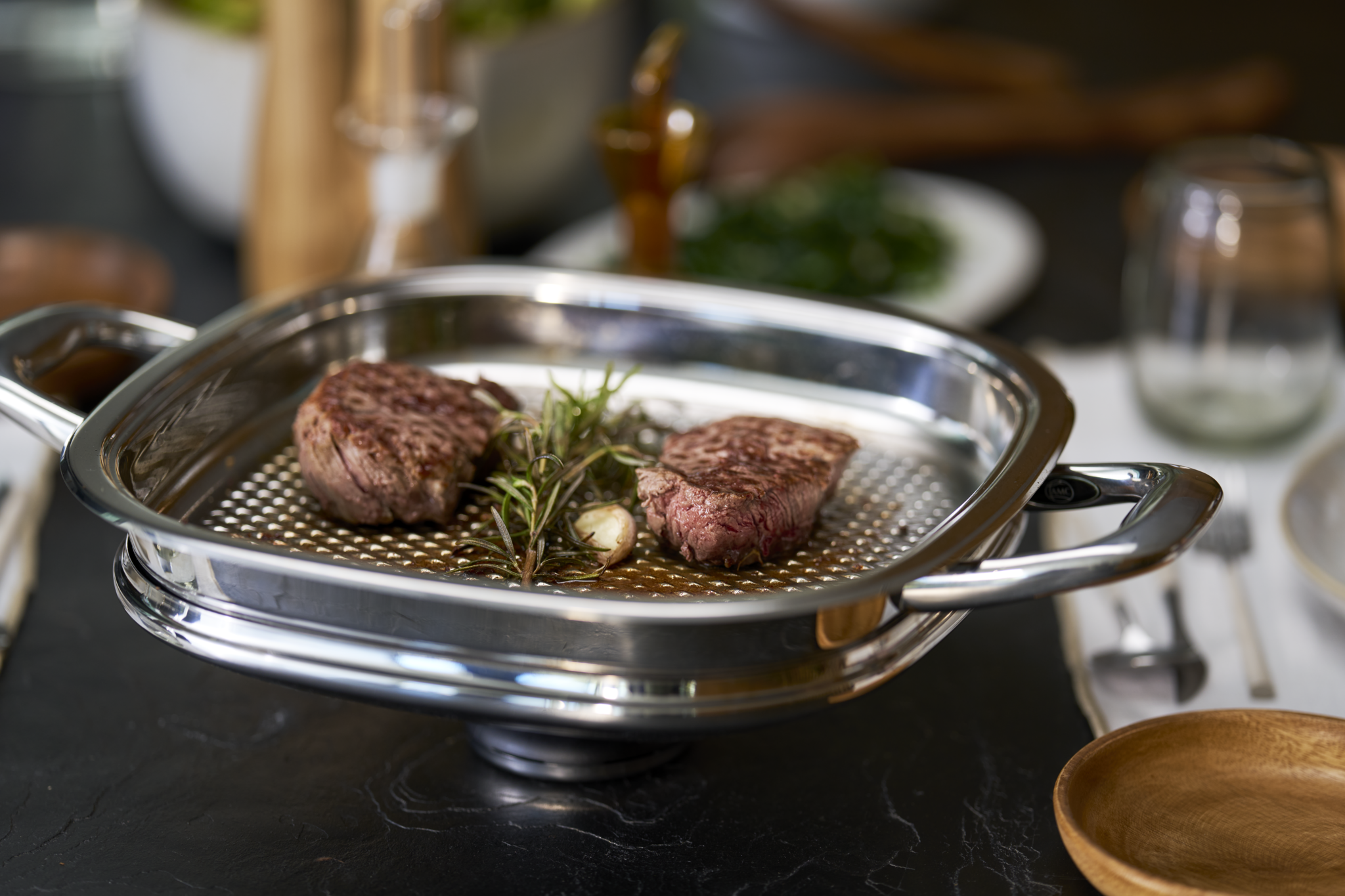
Not convinced? Here’s another option, because you don’t need to steam to contain temperature. You can use AbyAMC’s Convio system, with a smart lid, to fry or roast at lower heat more efficiently, in addition to steaming. With our smart temperature-monitoring lid, you can fry with the pan covered, keeping an eye on the heat level without needing to lift the lid. The addition of our Audiotherm time and temperature monitor means it can help you multitask, keeping an eye on your cooking food while you prep additional ingredients. And you can get more of the browning you want, with less of the mess you don’t.
Best of all, with Convio you can cook for large groups as you host your spring gatherings. Want to cook an entire fish? Roast or steam large vegetables, or large amounts of vegetables? Convio is perfect. In fact, “Convio” references the convivial environment created when groups of family and friends eat together around the same table. We created this set to enable spring cleaning, as well as clean spring cooking and hosting.
This is because, whatever the cooking method — whether frying, roasting, or steaming — or however large the group you’re cooking for, low heat is key to clean cooking.
See how the AbyAMC Pure Steam system transforms everyday cooking
See how the AbyAMC Convio system revolutionizes the simple methods of frying, roasting, or steaming
This spring, clean your kitchen — but also clean your cooking
You can scrub your stovetop and your cookware every spring, or you can reduce what makes them dirty in the first place.
The fact is, cooking doesn’t have to be that messy. Just lower the heat, cover the pot or pan, and let our smart temperature monitor tell you what’s happening under the lid. Whether you’re steaming, frying, or roasting, you can lower the heat and get better results. Yet of all the methods, steaming is the underrated hero.
If you’ve ever wondered, “Does steaming preserve nutrients?” — yes, it does. Thanks to the magic of science, steam cooks more quickly with less color, flavor, and nutrient loss.
But to gain the benefits of steaming, you have to use it as a cooking method, preferably frequently. If your current cooking methods don’t serve your health and your lifestyle, maybe it’s time to give steaming a permanent seat at the table. And bring fresh, firm, vibrant steamed food to your spring parties and gatherings.
Because spring is the season of fresh starts.
Cleaner counters to work on.
Lighter meals to enjoy.
Habits that support the changes you want to make in your life.
And a smarter way to use less heat to get more out of your food.
Ready for a kitchen reset? Take a look at AbyAMC’s Pure Steam, Pure Steam+, and Convio systems
Refresh your kitchen
Our top picks
Pure Steam
$795.00
 Pure Steam+
$945.00
Pure Steam+
$945.00
 Convio
$945.00
Convio
$945.00

Leave a comment
This site is protected by hCaptcha and the hCaptcha Privacy Policy and Terms of Service apply.