

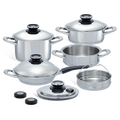
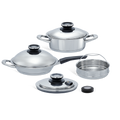
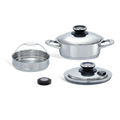
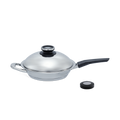


Stainless Steel Pots for sauces, soups, and one-pot meals
Choose based on the job you do most often:
- Saucepan: best for sauces, oatmeal, reheating, and small-batch sides
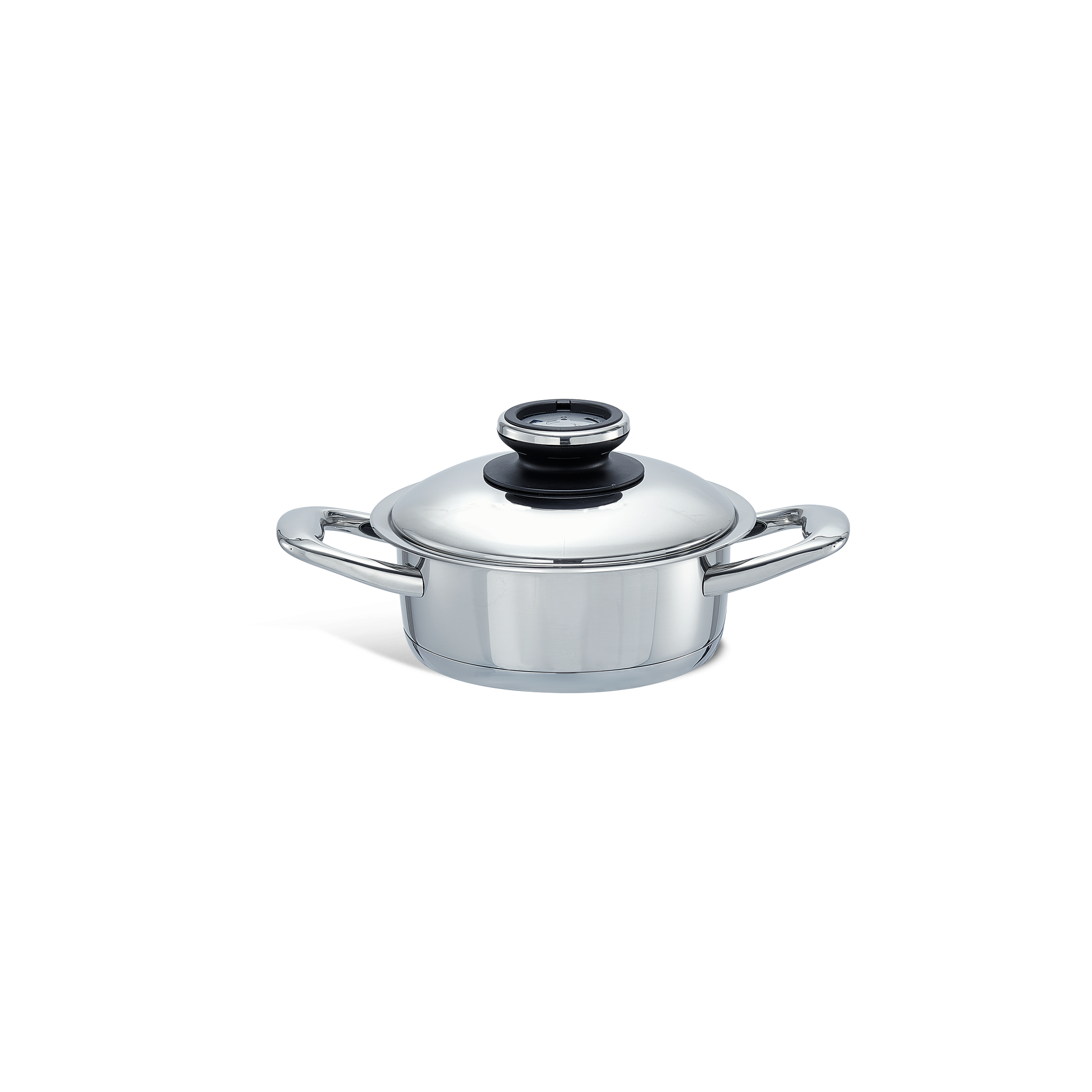
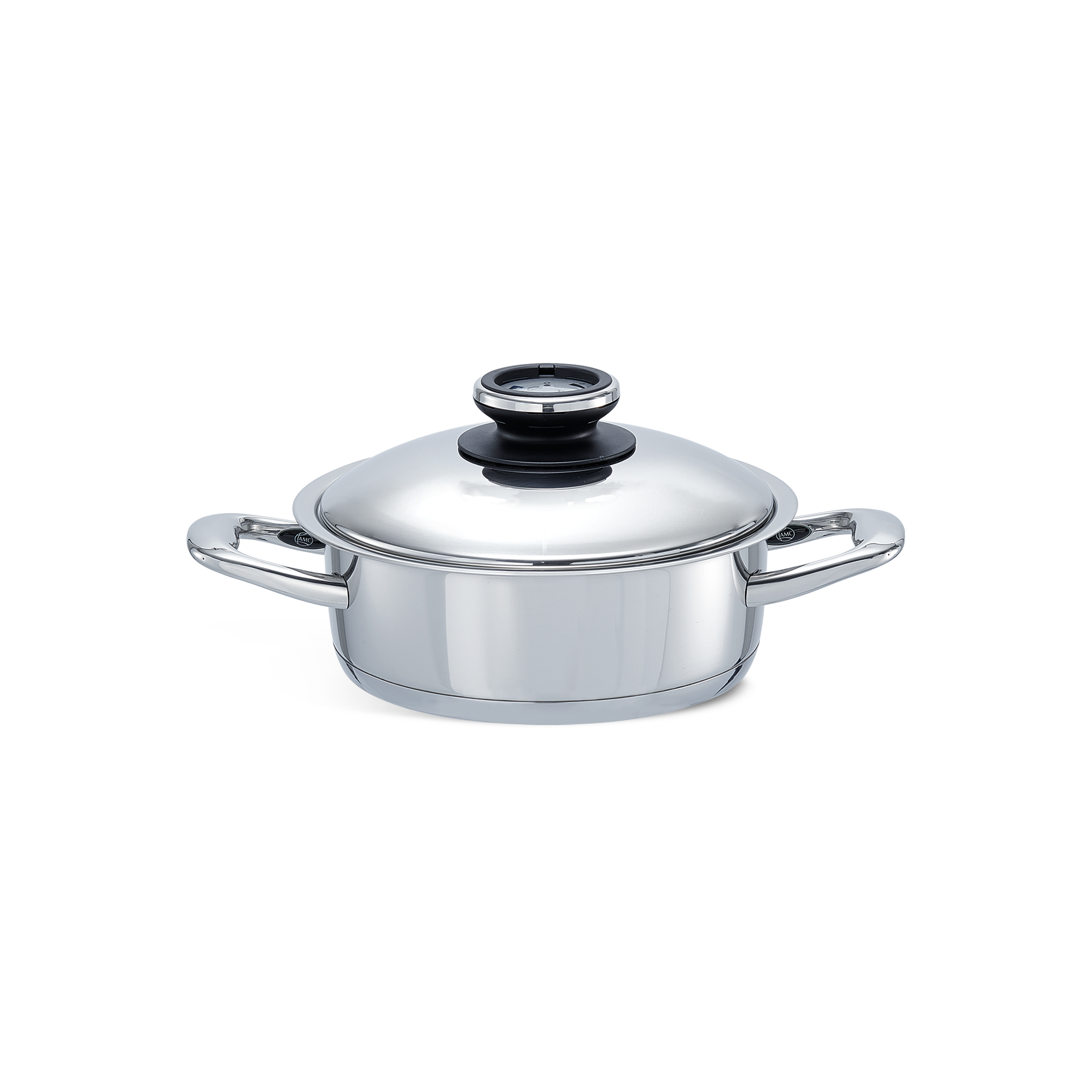
- Rondeau: wide and versatile for braising, risotto, one-pan pasta, and shallow simmering
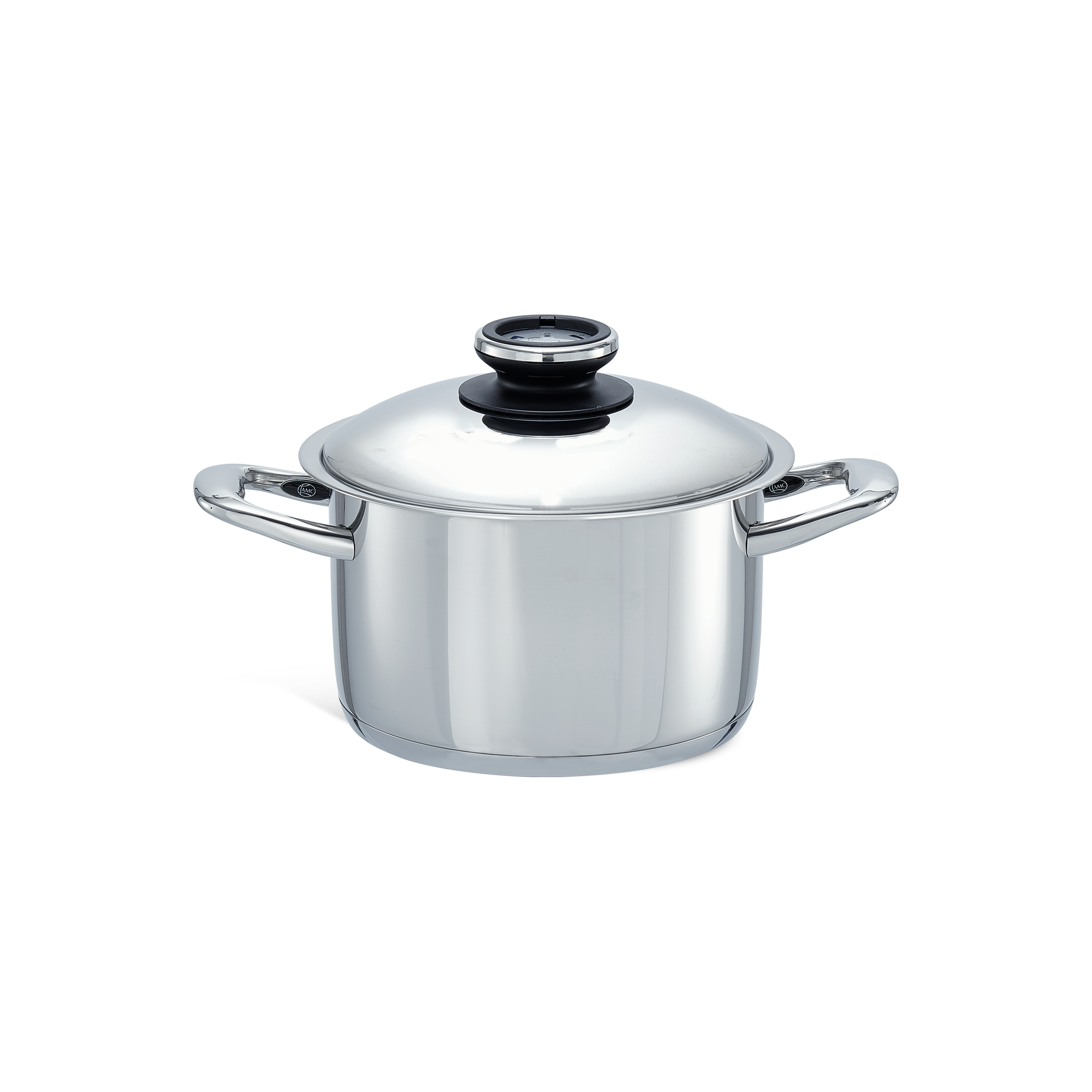
- Stock Pot: your go-to for broth, chili, batch cooking, and larger portions
Filters
3 products
As Seen In


Frequently asked questions
Everything you need to know about this collection — sizing, compatibility, technique, and care.
What's the difference between a Saucepan, Rondeau, and Stock Pot?
Saucepan (small, deep): sauces, grains, reheating, single-portion sides. Rondeau (wide, shallow): the kitchen workhorse — braises, one-pot meals, sautéing, simmering, and the foundation pot for steaming. Stock Pot (tall, deep): soups, stocks, pasta, batch cooking, and tall multi-layer steam stacks. Most kitchens benefit from owning all three; if you can only pick one, the Rondeau is the most versatile.
What size pot do I need for a family of four?
For a typical 3–4 person household, a 24cm Rondeau and a 24cm Stock Pot cover most weeknight meals. Add a Saucepan for sauces and sides. Bigger families or batch cooks should size up the Stock Pot for soups, stocks and Sunday meals.
Can I steam in any A by AMC pot?
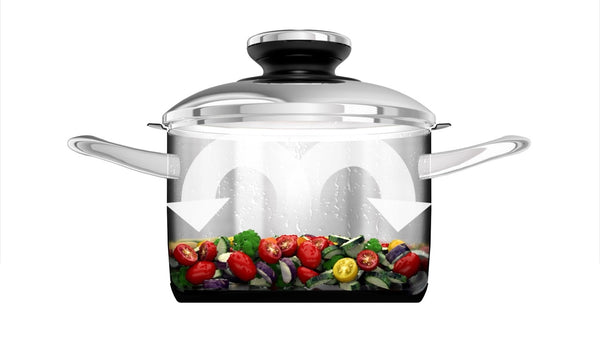
Yes — both the Rondeau and the Stock Pot accept the Softiera and Combi steaming inserts, and the EasyQuick lid fits both. This is what makes the system work as one connected unit: the same pot can sauté, braise, simmer or steam depending on the lid and insert.
Are the lids interchangeable across pots?
Lid sizes are matched to pot diameters. Within a diameter (e.g., 24cm) the Rondeau lid fits the Stock Pot. The EasyQuick steaming lid is sized to fit both Rondeau and Stock Pot in the same diameter.
How do I prevent food from sticking on stainless?
Three rules: (1) preheat the dry pot before adding fat or liquid; (2) wait for the Visiotherm to indicate the right zone — protein releases naturally once it has formed a crust; (3) don't move food too early. With the Audiotherm you get an audible signal when temperature is reached, which removes the guesswork.