



Better Flavor, Better Presentation: The Impact of Food Presentation and Cooking Methods on Home Cooking
For aspiring home chefs, the pursuit of better food usually starts with finding new recipes. Tell me if this sounds familiar: you buy a new cookbook at the bookstore — filled with beautiful glossy photos of delicious dishes you hope to recreate.
Or you search online for hours to find the perfect recipe on a food blog — and because it’s on a website, you can scale the recipe up or down automatically with just a click.
Or maybe you see a recipe on a cooking show and want to reverse-engineer it.
All these sources of inspiration — combined with high-quality ingredients, unusual flavors you haven’t cooked with before, new spices, and creative plating ideas — can spark excitement and motivation in the kitchen.
But here’s the thing — one critical factor is often overlooked: the cooking method itself.
It’s not just about what goes into the pan or pot. The way food is cooked has a direct, measurable impact on flavor, texture, color, and structure.
In other words, method determines not only how food tastes, but also how it looks on the plate.
This is why restaurant dishes feel refined even when they use simple ingredients — and why home-cooked meals can sometimes fall wildly short visually, despite great effort and quality ingredients.
The difference is rarely talent or ingredient quality. It’s method. And you don’t need a culinary school background to achieve impressive results at home.
The science behind why cooking methods matter more than most home chefs realize
Every cooking method manipulates four essential variables: heat, moisture, fat, and time.
Together, these variables determine whether food feels vibrant or dull, whether textures seem intentional or accidental, and whether flavors concentrate or disappear.
When the wrong cooking method is used — one that doesn’t suit the ingredients, cuisine, or desired outcome — common problems appear. Have you ever experienced results like these?
- Vegetables losing their color and crunch, collapsing into soft, pale shapes
- Fish flaking unevenly, feeling gummy, or releasing too much liquid
- Meat shrinking, toughening, or looking dry on the plate
When the method is right, food almost plates itself. Colors stay bright, shapes hold their form, and textures feel balanced. This is the foundation of gourmet cooking at home.
Let’s take a simple example: an Asian stir-fry. To achieve colorful, firm, flavorful vegetables, they are julienned into even “sticks” and added to oil in a very hot pan. The intense heat allows them to cook quickly while retaining color, moisture, and flavor — and even enhances taste with less oil.
Using the same ingredients but cutting them unevenly and cooking at lower heat for longer would likely result in a limp, oily mess. Perfection here is about technique — the proper management of heat, moisture, fat, and time.
We taste with our eyes first
Our noses may help us detect food from a distance, but our eyes decide whether we want to eat it. Long before the first bite, our brain evaluates what we see and judges whether it looks nourishing and safe.
- Bright green suggests freshness.
- A golden sear signals depth of flavor through caramelization and the Maillard reaction .
- Clean lines and defined shapes suggest control and expertise.
This is why food presentation and cooking methods cannot be separated.
- If vegetables are overcooked, no garnish can restore their structure.
- If proteins are unevenly browned, the plate looks chaotic and undermines confidence.
Professional food styling starts during cooking, not after. Better presentation is often a by-product of better cooking, not better decorating.
Steaming vs. boiling: a small example with big impact
Vegetables clearly demonstrate how cooking methods affect both flavor and appearance. Boiling often leads to:
- Washed-out colors (and lost nutrients) as phytonutrients leach into the cooking water.
- Loss of structure, as cell walls break down and release water.
- Diluted flavor, as water pulls out natural savor.
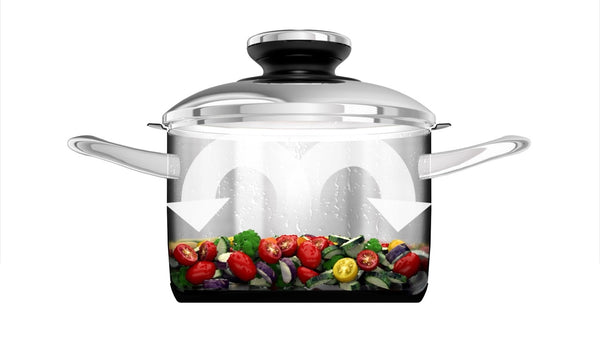
Gentle steaming, on the other hand, is better for:
- Preserving natural pigments, as supported by recent research.
- Maintaining texture and shape, since vegetables are not submerged in water.
- Concentrated flavor from minerals, vitamins, flavonoids, polyphenols (and other impressive-sounding compounds) retained through this cooking method.
This is why steamed broccoli can appear bright green and crisp, while boiled broccoli often looks pale green and limp. The difference on the plate is immediate — and so is the difference in taste.
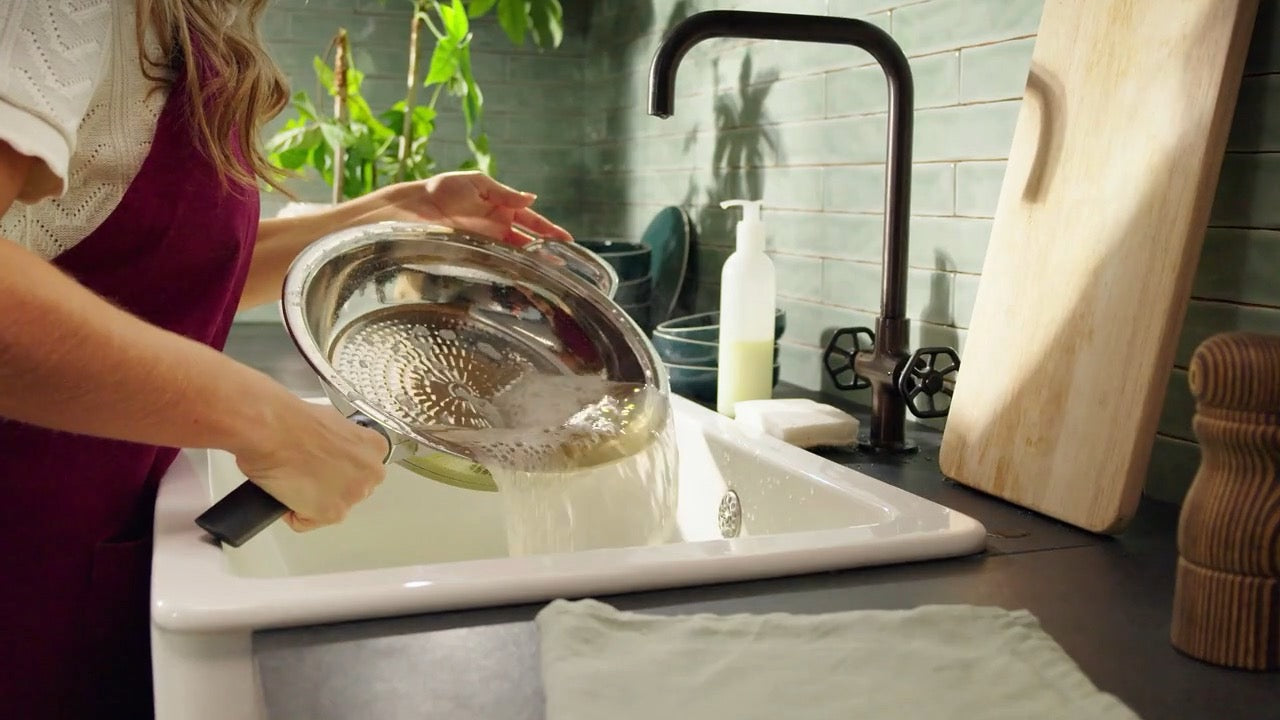
Choosing to steam rather than boil is one of the fastest upgrades in food presentation for aspiring home chefs who want a more refined look to their plated dishes.
Searing, roasting, and the power of controlled heat
Steaming is a healthy way to cook, but what about high-heat methods like searing and roasting? These methods are essential for developing depth of flavor — but only when heat is controlled. We’ve all experienced food sticking to a pan or charring (and not in a good way) because the pan is too hot at the wrong time. That’s why it’s important to sear and roast with intention.
Proper searing and roasting create:
- Even browning and caramelization (hello again, Maillard) that looks and tastes delicious
- A restaurant-quality crust and elegant presentation on proteins like filet mignon, where a quick, high-heat sear locks in juices
- Visual contrast on the plate, with pleasing grill marks, crisp edges, and other appetite signals
- Aroma and richness — nothing creates great kitchen smells like searing or roasting
But when heat is too aggressive or inconsistent:
- Surfaces burn before interiors are cooked, creating the worst of both worlds — charred outsides with raw insides
- Color becomes uneven and harsh, with burned black patches instead of pleasant toasty browning
- Harmful substances can form when food chars heavily, as fats break down and potentially harmful compounds may be produced
- Food looks dry or greasy, when heat, moisture, fat, and time work against you instead of with you
Professional kitchens achieve consistency by stabilizing temperature and respecting timing. Chefs are trained to be fast, precise, and consistent — so they can create the same dish hundreds or thousands of times.
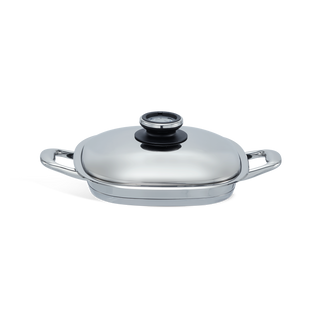
Perfect sear, perfect temp
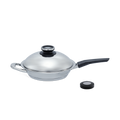
 Grill Pan with Lid
$445.00
Grill Pan with Lid
$445.00 Audiotherm
$125.00
Audiotherm
$125.00In the same way, at home many presentation issues come from uneven heat rather than uneven skill.
Moisture can be the silent enemy of good presentation
One of the most overlooked aspects of cooking is moisture management.
Too much moisture in the final dish leads to soggy textures, diluted sauces, and plates that look messy.
On the flip side, too little moisture results in unappetizing dryness and cracking.
The best cooking methods strike a balance by:
- Preventing unnecessary water loss, which often happens with poor or thoughtless technique
- Avoid flooding food with fluids — instead, be intentional about the balance of dry and wet ingredients, and how moisture is either lost or retained.
- Allow natural juices to stay in the food, where they belong — instead of drying them out.
When moisture is controlled, food holds its shape. This also allows sauces and other elements on the plate to complement each other, enhancing both visual appeal and flavor without making the dish look messy.
Best of all, plating feels effortless rather than forced.
Why restaurant food looks so effortless
Restaurant food often looks (and tastes) brighter, more flavorful, and more elegant than home cooking, even when the ingredients are identical. The reason is not secret techniques — it’s repeatability.
Professional kitchens are “professional” because they rely on:
- Standardized cooking methods so different staff can create the exact same results
- Predictable temperature behavior so timing is accurate and food looks its best every time
- Minimal improvisation during cooking, so customers get what they expect — time after time
Professional chefs are trained to master these techniques, ensuring that every dish is consistently beautiful and expertly presented.
Home cooking often introduces chaos — changing heat mid-process, switching methods halfway through a dish, or compensating for uncertainty by moving too fast. The result is food that tastes fine, but doesn’t look like the photo in the cookbook.
Consistency creates calm on the plate and in your kitchen — and calm is what reads as elegance.
If you want dishes that feel as special as a fancy restaurant, consistency is the key.
Professional food styling starts in the pan
Many home chefs assume food styling is about tweezers, microgreens, dramatic mounds, or drizzling and smearing sauces for artistic plating.
In reality, professional food styling begins much earlier.
Harnessing the four variables that drive cooking method — heat, moisture, fat, and time — makes a dramatic difference:
- Respect food with heat. Choose methods that preserve structure, flavor, and nutrients instead of destroying them, and match temperature to the method.
- Add moisture intentionally. Understand how to cook with food’s existing water content, use as little water as possible, and don’t increase moisture accidentally.
- Use fat deliberately. Use the right type and the right amount, at the right moment for the temperature.
- Know when it’s time to stop the cooking process. It’s as important as knowing how to start. This means thinking about what’s in the pan and what it needs to cook properly.
When you follow these principles, it becomes simpler to serve attractively presented dishes. Great presentation not only makes food more visually appealing but also enhances the overall dining experience. When you plate food with attention to detail, the plate becomes a feast for the eyes as well as the palate. Less manipulation is needed because the food already looks deliciously intentional.
Frequently Asked Questions about cooking methods from other home chefs
Does cooking method really affect taste?
Yes, really. Cooking method determines browning, moisture retention, and aroma — all core elements of how the people eating your food will perceive the flavor.
Why does food at my favorite restaurant look better than the food I serve at home?
Restaurants use repeatable, controlled methods that protect color, texture, and structure.
Is steaming better than frying?
It depends on the ingredient. Steaming excels for vegetables and fish, while searing and roasting work better for meats. The key is choosing the right method for the right food.
How do chefs keep vegetables so colorful?
Chefs keep vegetables bright and vibrant by controlling heat, time, and moisture with real precision.
How can healthy cooking still look gourmet?
Healthy cooking looks gourmet when it is guided by control of heat, moisture, fat, and timing. Elegance comes not from richness, but from thoughtful technique and deliberate simplicity.
Confidence shows on the plate
As home chefs, all we really want to do is make the food we cook for ourselves, our friends, and our families look and taste good — every time we cook. We want to feel like we spend the same amount of time cooking as we used to, but the results are better and better.
We want to hear “Wow, that looks delicious!” every time.
And here’s where psychology comes in.
When our results are unpredictable, cooking feels messy and stressful. We toss the food on the plate just to get it to the table. Presentation is an afterthought.
But when our cooking methods are reliable, our confidence increases — and it shows in our food.
If you’ve felt like you’re plateauing as a home chef, it may not be because you lack creativity or energy, but because you lack consistency.
Mastering a few reliable cooking methods can bring you this consistency, take away your uncertainty, and create the space for you to refine the way your food looks.
Method is the hidden upgrade — and we can help
Better ingredients rock.
Beautiful presentations inspire.
But better cooking methods transform everything.
If your goal is gourmet cooking at home — food that tastes better and looks more refined — the most powerful change is not a new recipe.
It’s choosing cooking methods that respect the ingredients, control heat, and preserve structure.
Once you master cooking methods, you’ll find the flavor of the food you prepare deepens naturally, and your presentations take less effort. The result is food that feels intentional, confident, and genuinely professional — right from your own kitchen.
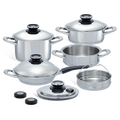
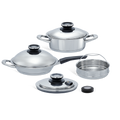
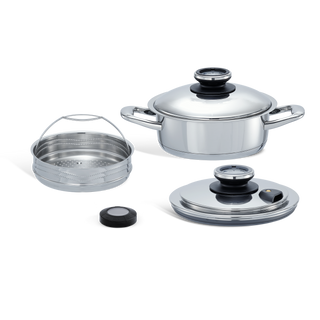
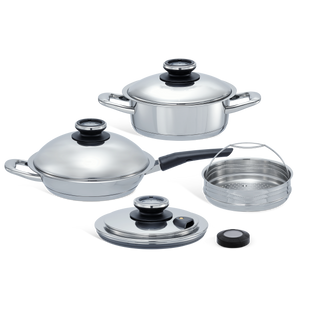
AbyAMC can help, with a cooking system built to make mastering cooking methods and consistency easy. And if you’re already looking for a cookware set to easily create better flavor and presentation, we recommend our Pure Steam. It’s got everything you need to master steaming, as well as searing, roasting, and frying.
Better flavor, every plate

Leave a comment
This site is protected by hCaptcha and the hCaptcha Privacy Policy and Terms of Service apply.