

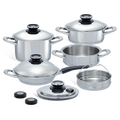
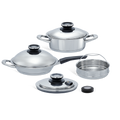
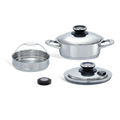


The Impact of Cookware on Health: Why Non-Toxic Cookware Matters
The cookware you choose does more than heat your food, it can influence your long-term health. Many home cooks focus on ingredients, sourcing, and cooking methods, but overlook the one thing that touches their food every single day: the pan. Depending on the material, cookware can leach chemicals, metals, or micro-particles into meals, especially when heated or used with acidic ingredients.
As research continues to explore how everyday exposures affect wellness, choosing non-toxic cookware is one of the simplest ways to reduce risk in your kitchen. When your cookware is free from coatings, glazes, and chemicals that break down over time, you’re able to cook with confidence knowing your meals are as clean as the ingredients you choose.
Explore A by AMC Non-Toxic Cookware
Why Non-Toxic Materials Matter
Protect Your Health
Cookware made from unsafe materials or coated with chemicals can release toxins into food at high heat. Non-toxic options like stainless steel and ceramic eliminate this risk, so every meal is safer for you and your family.
Smart, even cooking
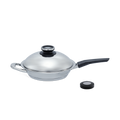
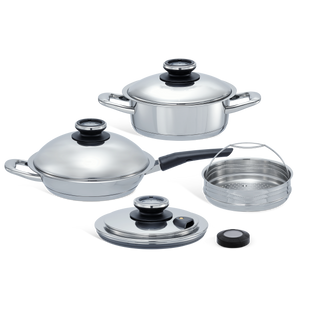
 Frying Pan with Lid
$365.00
Frying Pan with Lid
$365.00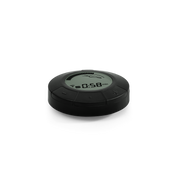 Audiotherm
$125.00
Audiotherm
$125.00
Research shows that traditional non-stick coatings such as PTFE can break down at high temperatures and release potentially harmful fumes.¹ Many non-stick pans also rely on fluorinated chemicals (PFAS), which may degrade with heat or scratching. Some studies link PFAs to hormone disruption (including effects on thyroid function) and other long-term health concerns.²
Emerging research also suggests that certain types of non-stick coatings can shed microscopic particles when scratched or overheated. While the long-term effects of ingesting microplastics are still being studied, early findings suggest they may contribute to inflammation and oxidative stress in the body.² Choosing non-toxic, uncoated materials helps you avoid this growing concern.
Preserve Flavor and Nutrients
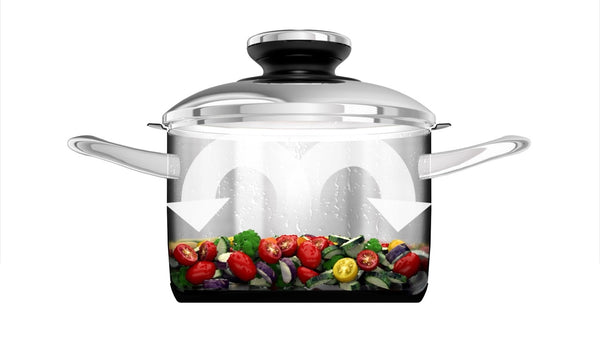
When cookware heats unevenly or reacts with ingredients, the quality of your food suffers. Uneven temperatures can lead to overcooked edges, raw centers, and lost nutrients. Non-toxic cookware provides even heat distribution and non-reactive surfaces, helping vegetables stay crisp, grains stay fluffy, and proteins cook evenly. This supports nutrient retention and keeps flavors clean and true to the ingredients.
Durability Meets Safety
Modern non-toxic cookware is not only safe but built to last. Investing in high-quality cookware gives you long-term performance and peace of mind in the kitchen.
The Hidden Risks of Conventional Cookware
To understand the value of non-toxic cookware, it helps to look at what you’re choosing not to bring into your kitchen:
Nonstick coated pans:
Convenient, traditional non-stick coatings can degrade under high heat and release fumes or particles.¹ PFAS used in manufacturing these coatings have also raised concerns in research due to their persistence and potential health effects.²
Aluminum cookware:
Aluminum is lightweight and affordable, but uncoated aluminum is reactive with acidic foods. While anodized aluminum is more stable, the surface can wear over time.
Copper cookware:
Beautiful and effective, but without a stainless steel lining, copper can leach into food. High levels of copper intake can be harmful, which is why many chefs opt for stainless steel-lined copper instead.
What Makes A by AMC Non-Toxic
A by AMC combines durability, performance, and safety to give you cookware that aligns with a cleaner, more sustainable way of cooking.
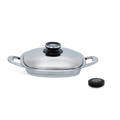
Our cookware is crafted from high-quality stainless steel, one of the safest and most stable materials you can cook with. Unlike non-stick coatings or chemically treated surfaces, stainless steel is naturally non-reactive, meaning it won’t leach chemicals, break down under high heat, or interact with acidic foods.
Stainless steel is free from synthetic coatings, PFAS, PFOA, lead, and other additives commonly found in traditional non-stick cookware. Even at high temperatures, it remains structurally sound, so you don’t have to worry about fumes, flaking, or microplastics entering your meals.
Stainless steel is also a more mindful choice for the planet. Long-lasting and fully recyclable, it reduces the need for frequent pan replacements. By choosing durable stainless steel, you’re lowering waste, minimizing chemical pollution, and investing in cookware that supports a healthier kitchen and a healthier earth.
FAQ: Non-Toxic Cookware
What makes cookware non-toxic?
Non-toxic cookware is made from materials that do not leach harmful chemicals into your food, even at high temperatures. A by AMC cookware avoids coatings that can degrade over time.
Why does the material matter for my health?
Some metals and coatings can react with acidic foods or release toxins during cooking. Non-toxic cookware eliminates these risks while preserving flavor and nutrients.
Can non-toxic cookware perform as well as traditional cookware?
Yes. Modern non-toxic cookware is designed for excellent heat distribution, searing, braising, and even delicate cooking. Performance is comparable (or better) than older coated alternatives.
Shop Non-Toxic Cookware
Sources:
1 https://pubmed.ncbi.nlm.nih.gov/28913736/
2 https://www.medicalnewstoday.com/articles/are-nonstick-pans-toxic

Leave a comment
This site is protected by hCaptcha and the hCaptcha Privacy Policy and Terms of Service apply.